

Living in rural areas brings a unique sense of peace and connection to nature. We cherish the open spaces, the quiet, and the beauty of the landscape. However, this lifestyle also comes with inherent challenges, especially when it comes to safeguarding our properties and communities from the ever-present danger of fire.
Rural fire threats are a serious concern. They can escalate quickly because of dry conditions, dense vegetation, and remote access difficulties. This makes rapid response and effective suppression capabilities absolutely critical for those of us living outside city limits.
I understand the need for reliable fire prevention measures and tools tailored for these environments. That is why I want to explore how specialized equipment provides crucial defense. We need to empower ourselves with the right solutions to protect our homes, livelihoods, and the natural beauty around us.
Understanding the Rising Threat of Rural Fires
The danger of rural fires, often called wildfires or brush fires, continues to grow. We see longer dry seasons and more extreme weather patterns across many regions. This creates ideal conditions for fires to ignite and spread with incredible speed.
Remote properties are particularly vulnerable. They are often surrounded by natural fuels like dry grasses, trees, and shrubs. These materials can easily catch fire and act as a pathway for flames. When a fire starts, it poses a direct threat to homes, agricultural operations, and vital infrastructure.
Access for traditional large fire trucks can be a major challenge in these areas. Narrow roads, steep terrain, and long distances mean that every minute counts. A delayed response can turn a small blaze into a devastating inferno. I have seen firsthand how quickly a fire can change from a distant plume of smoke to a direct threat to our community.
Environmental Factors Increasing Wildfire Risk
Several environmental elements contribute to the rising fire risk in rural settings. Persistent droughts dry out landscapes making them highly combustible. High winds can fan flames and carry embers long distances, creating new spot fires far ahead of the main front.
Fuel load is another significant factor. Accumulated dead vegetation, fallen trees, and overgrown brush provide ample material for fires. These conditions mean that once a fire starts, it has plenty to feed on and grow quickly. We must recognize these risks to better prepare.
Economic and Social Impacts
The fallout from rural fires extends far beyond burned structures. Economic losses can be immense, impacting farms, ranches, and small businesses that rely on the land. People lose their homes, livestock, and crops, sometimes entire livelihoods.
The social cost is equally heavy. Communities face displacement, emotional trauma, and the long, difficult process of rebuilding. These events can disrupt daily life for months or even years. They strain local resources and require significant collective effort to overcome.
What Are Skid Unit Solutions for Fire Suppression
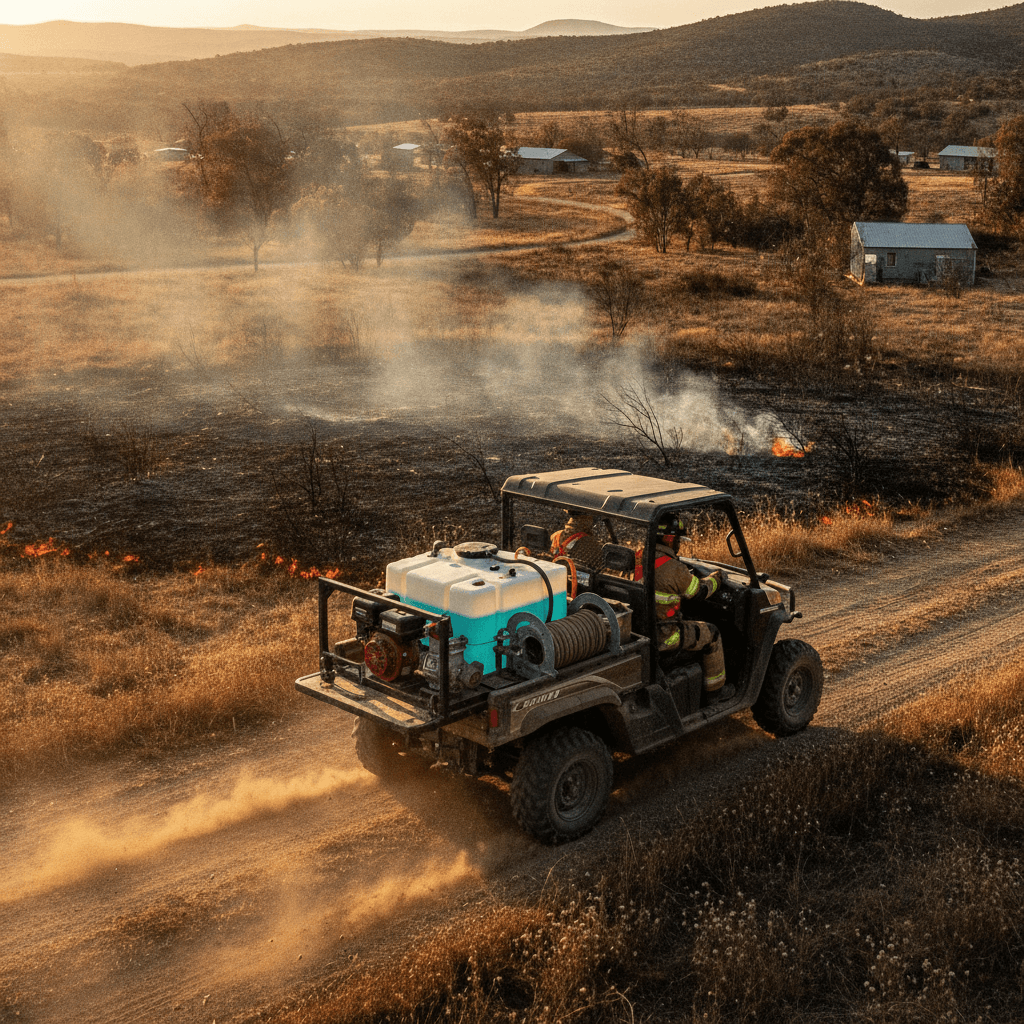
When we talk about countering rural fire threats, one of the most practical and adaptable solutions is the fire suppression skid unit. These units are self-contained systems designed to be mounted onto various vehicles. They offer immediate fire control capabilities where large municipal trucks cannot easily go.
A typical skid unit includes a water tank, a pump, an engine, and hose reels with nozzles. This compact design makes them incredibly versatile. You can install them on the back of pickup trucks, flatbed trailers, utility vehicles, or even smaller UTVs. This means existing fleet vehicles can quickly transform into effective firefighting apparatus.
The core advantage lies in their portability and independence. They do not rely on municipal water hookups because they carry their own water supply. This makes them ideal for initial attack on small fires or for providing critical support until larger resources arrive. I have learned that having a mobile water source is a game changer for remote properties.
Key Components of a Fire Skid Unit
At the heart of every skid unit is the water tank, usually made from durable poly or steel materials. These tanks come in various sizes from 50 gallons up to several hundred gallons, depending on the unit’s intended use and the carrier vehicle’s capacity. The pump is driven by a small gasoline or diesel engine, providing the necessary pressure to deliver water.
Hose reels are common features. They often include a high-pressure hose for direct fire attack and possibly lower-pressure hoses for drafting water from external sources like ponds or tanks. Different nozzles offer various spray patterns, from a powerful stream for knocking down flames to a wide fog for protecting exposures. Some units also incorporate foam injection systems for added effectiveness on certain types of fires.
Versatility in Deployment
The modular nature of skid units allows for immense versatility. A rancher can mount one on a utility vehicle to patrol fence lines during dry periods. A rural homeowner can keep one on a trailer for rapid deployment to protect their home or outbuildings. Businesses with large rural properties can equip multiple vehicles, creating a dispersed fire response capability.
This adaptability means that precious time is saved. There is no waiting for specialized fire department vehicles to arrive from a distant station. We can respond immediately to new ignitions or to protect vital infrastructure. This local, immediate response is often the most critical factor in controlling rural fires before they become uncontrollable.
Essential Features of Effective Rural Fire Skid Units
When considering a skid unit for rural fire protection, certain features stand out as essential. I always advise people to look for units that balance power, capacity, and durability. The unit needs to reliably deliver water under pressure and withstand challenging operating conditions.
Water capacity is a primary consideration. A larger tank means more firefighting time but also more weight. Pump power directly impacts the reach and effectiveness of water delivery. A strong pump can push water further and handle higher elevations or longer hoses. These capabilities are very important in uneven rural terrain.
Nozzle types and hose lengths also matter. You need a nozzle that can create a strong stream for direct flame impingement and a wide fog pattern for cooling and containment. Sufficient hose length allows operators to reach beyond the vehicle itself, covering more ground safely. We need tools that work in the moment.
Power and Water Delivery Systems
A reliable pump and engine combination forms the core of a skid unit’s firefighting capability. High-quality centrifugal pumps can move large volumes of water quickly. They can also maintain good pressure for effective stream penetration. The engine needs to be robust, easy to start, and capable of sustained operation without overheating. I recommend units with readily available parts and simple maintenance procedures.
Some advanced systems include a “pump and roll” feature. This allows the operator to drive the vehicle and spray water simultaneously. This is very useful for laying down a wet line during a moving fire. Many units also offer auxiliary suction ports so you can quickly refill the tank from external water sources like static tanks, ponds, or swimming pools. This greatly extends the operational time of the unit.
Construction and Terrain Navigation
Durability is key for equipment used in rough rural settings. The frame of the skid unit should be constructed from sturdy materials like steel or aluminum. It needs to protect the components from impacts and vibrations. The overall design should minimize snag points because operating in brushy or wooded areas is common. I always inspect the build quality and material choices.
Mobility is another critical aspect. The unit must be compatible with a vehicle that can navigate the specific terrain of your property. This might mean a four-wheel-drive pickup for general use or a rugged UTV for tight trails and steep hills. The ability to get water directly to the fire’s edge, regardless of the terrain, is paramount for effective suppression. I believe that thoughtful choices in equipment can make a real difference in fire safety.
Benefits of Using Skid Units for Rural Property Owners
For rural property owners, the integration of skid units into their emergency preparedness plan offers significant advantages. These units provide a level of self-sufficiency that is invaluable in remote locations. I see them as a crucial layer of defense, especially when every second counts.
One primary benefit is the rapid response capability. When a fire breaks out, local fire departments might be minutes or even hours away. A property owner equipped with a skid unit can immediately attack a small fire. This greatly increases the chance of extinguishing it before it grows. This immediate action can prevent a minor incident from becoming a major disaster affecting multiple properties.
Skid units are also a cost-effective solution. They represent a much smaller investment compared to purchasing and maintaining a full-sized fire engine. This makes professional-grade fire suppression accessible to more individuals and organizations. It is about smart spending for essential protection.
I also value the ability to protect specific assets. A large fire might overwhelm a property, but a skid unit allows focused efforts on a home, a barn, or valuable equipment. This strategic defense can save critical structures. It empowers individuals to take direct control over their safety.
Bridging the Response Time Gap
Rural emergency services, while dedicated, often face vast distances and limited personnel. The gap between a fire starting and professional responders arriving can be substantial. A well-equipped skid unit fire protection setup directly addresses this delay. It allows for immediate action, cooling hot spots, creating firebreaks, or applying foam before the fire can gain strength. This initial attack can be the difference between minor damage and total loss. I know that early intervention is incredibly effective.
Protecting Valuable Assets
Every rural property has its irreplaceable elements. For many, it is their home. For others, it is livestock, valuable equipment, or even historic outbuildings. Skid units allow owners to prioritize and protect these assets directly. You can use the unit to wet down structures and surrounding vegetation, creating a buffer zone. This proactive defense is powerful. It gives peace of mind knowing you have tools ready to deploy.
Integrating Skid Units into Existing Rural Fleets and Operations
Adding a skid unit to your rural fire strategy involves more than just purchasing equipment. It is about seamlessly integrating it into your existing fleet and operations. This ensures maximum readiness and effectiveness when a fire threat emerges. We need to think about practical application.
Skid units offer flexible mounting options. They can easily fit onto the bed of a heavy-duty pickup truck, a flatbed trailer towed by a tractor, or specialized utility vehicles like UTVs. The choice depends on the terrain, the required water capacity, and the vehicle’s availability. I always consider how the unit will be transported and deployed quickly.
Training is another vital component. Operating a fire suppression skid unit requires knowledge of its components, safe operation procedures, and basic firefighting techniques. Owners and designated operators should receive proper training. This includes understanding pump operation, nozzle handling, and tactical deployment. We must know how to use the tools we have.
Regular maintenance and readiness checks are also crucial. A fire suppression unit is an emergency tool so it must always be in working order. This means checking fluid levels, testing the pump, inspecting hoses, and ensuring the water tank is filled. These routine checks guarantee that the unit is ready to perform when it is most needed.
Vehicle Compatibility and Installation
The first step in integration is choosing the right vehicle. Considerations include the vehicle’s payload capacity, its off-road capabilities, and the space available for the skid unit. Many manufacturers offer mounting kits or universal designs that make installation straightforward. I recommend securing the unit properly to prevent shifting during travel over rough terrain. It needs to be stable and safe.
We also need to think about power. Most skid units have their own engines, but some may draw power from the vehicle. It is important to ensure all connections are robust and properly installed. This attention to detail ensures reliability in an emergency. We cannot afford breakdowns when a fire is near.
Training and Operational Preparedness
Effective training transforms a piece of equipment into a potent defense system. Operators should learn how to quickly and safely deploy hoses, start and stop the pump, and manage water flow. Understanding different fire types and basic suppression strategies is also beneficial. I encourage practice drills. This builds confidence and muscle memory.
Beyond operating the unit, preparedness involves understanding your property’s specific fire risks. This includes identifying potential water sources, planning escape routes, and creating defensible spaces around structures. A well-trained operator combined with a well-prepared property forms a formidable defense against rural fire threats.
Choosing the Right Skid Unit for Your Needs
Selecting the ideal skid unit for your rural property requires careful consideration of various factors. It is not a one-size-fits-all solution, so I always recommend assessing your specific situation. This ensures you invest in a unit that truly meets your protection needs.
First, evaluate your property size and its unique risk profile. A small parcel with sparse vegetation might need a smaller, more mobile unit. A large ranch with dense forests and multiple structures will likely require a larger tank and a more powerful pump. Consider the type of vegetation, topography, and any nearby potential ignition sources. These details guide your decision making.
Water sources and accessibility are also important. Do you have a pond, well, or large storage tanks on your property? Your chosen skid unit should have the ability to draft water from these sources if needed for refilling. Think about how easily you can access different parts of your property with your chosen vehicle and unit. This impacts deployment speed.
Budget obviously plays a role. Skid units vary in price based on size, features, and construction quality. Balance your budget with the level of protection you require. Sometimes investing a bit more upfront saves significant money and heartache in the long run. There are many options available.
Conclusion: Safeguarding Rural Communities Against Fire
The threat of rural fires is a reality we all face in the countryside, but it is a threat we can actively counter with preparedness and the right tools. I have discussed how fire suppression skid units offer an invaluable solution for property owners and communities. Their versatility, rapid deployment, and independence from municipal infrastructure make them an ideal defense for remote locations. We explored their essential components, from durable tanks and powerful pumps to specialized nozzles and robust construction. These features ensure they perform when conditions are at their worst. The ability to quickly respond to a new ignition or protect critical assets can prevent minor incidents from escalating into widespread devastation. We learned that integrating these units effectively involves careful vehicle selection, proper installation, and most importantly, ongoing training and maintenance for operators.
I firmly believe that equipping ourselves with these solutions is not just about owning equipment. It is about empowering ourselves to protect what matters most. It is about building resilience in our rural communities. I encourage everyone in high-risk areas to research these options. Consider how a skid unit could enhance your personal or community fire safety plan. Take action today to prepare for tomorrow. Your preparedness can make a difference in safeguarding our beautiful rural landscapes and the lives within them.

